Short-Form Content vs ADHD
the screens culture: the impact on attention-deficit/hyperactivity disorder and what happens to your brain when watching your silly little TikTok's


I read an article by another substack user about short-form content and what it is doing to your brain.
I found it incredibly informative, unsettling and it left me with some thoughts and questions.
my thoughts:
this has to part of the reason why people are self diagnosing OCD, ADHD etc.
It makes me sick realizing that short-form content was created with the knowledge that the dopamine loop keeps us wanting more.
It makes sense why my teachers in school ‘joked’ about how taking our phones away would light up our brains impulsive response like taking drugs away from an addict cold-turkey.
my questions;
how does short-form content affect a brain with ADHD?
how long does it take until your prefrontal cortex sustains permanent damage?
what would permanent damage look like?
we’re fucked????
Short-FORM CONTENT IS ROTTING YOUR BRAIN
let’s start with the basics.
what is short-form content?
also known as short-form video, is a video or post usually under 60-180 seconds designed for quick consumption and high engagement.
the most common platforms are TikTok, Instagram Reels and Youtube Shorts.
what’s driving the trend?
our attention spans are shrinking.
in the world of staying busy, the age patience and time no longer exist.
audiences want quick storytelling with instantaneous absorption of all valuable information and entertainment with minimal time commitment.
throughout the day, people can stay on top of everything all at once.
it’s convenient during those in-between moments waiting in a long line, on-the-go, or taking lunch breaks.
it’s designed to trap your mind.
think about how you feel watching motivational clips or a fitness transformation video. inspired.
for just eight seconds, you felt something, anything and then you moved on to the next video.
you had nothing to do with that persons hard work.
but you felt like you did.
and your brain can’t tell the difference.
your dopamine system responds almost the same way as it would if that were you.
which may sound great until you realize you spent an hour watching content.
and actually accomplished nothing.
you consumed 1,000 pieces of content and retained nothing after the first 4.
there are a few things we can acknowledge.
the rise in short-form content is a cultural shift driven by the evolution of technology, media platforms and consumer behavior.
the continued dominance of short-form content platforms like the ones lists above highlight the importance of adapting to the fast-paced digital environment.
short-form content is made to capture attention immediately and because social media apps are designed for easy engagement - likes, comments, clicks, and sharing - it makes it easier for brands to reach the target audience..
You.
ADHD: attention-deficit/hyperactivity disorder
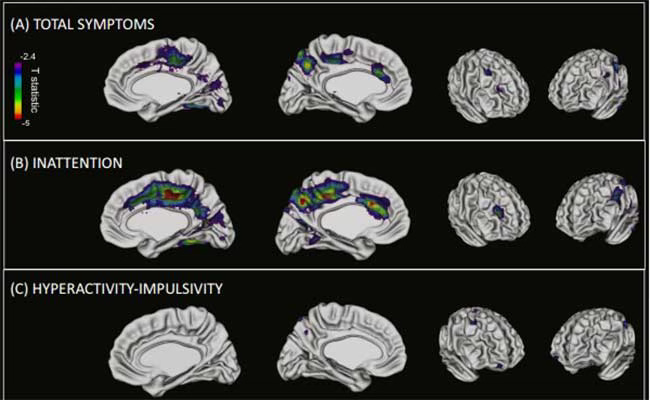
ADHD is one of the most common mental disorders.
it includes symptoms such as inattentions, hyperactivity (excess movement in an unfitting environment), and impulsivity.
now why is the first A in ADHD important.
Attention.
It’s a fundamental neurocognitive function that governs the selective processing of sensory inputs, thoughts and tasks.
it places a crucial role in children’s development, particularly in the acquisition of knowledge, skills, and problem-solving abilities.
attentional capacity development can be affected by factors such as genetic predispositions, prenatal neurodevelopment influences, and socioeconomic status, stimulation and adverse life experiences.
clinically significant attention disturbances—often accompanied by hyperactivity and impulsivity—are considered a quantitative trait that falls at the extreme end of distribution, classified as attention-deficit/hyperactivity disorder (ADHD).
research has shown that children with subclinical inattentive symptoms are increased risk for future academic and occupation difficulties, mental health problems, cognitive impairments and addictions behaviors, to a lesser extent than those with a clinical diagnosis.
inattentive problems—manifesting across a spectrum of behaviors, symptoms and functional disturbances—reviewed as part of a continuum, rather than solely as part a specific disorder.
attention is a coordinated function of multiple brain regions that undergo continuous development from the fetal period through birth and into adolescence.
children’s attentional capacity expands considerably as the transition from kindergarten to primary school happens.
that transition marks a period where attention-related difficulties related to the neurodevelopmental issues become more apparent in relation to peer differences.
though the average diagnosis age is between ages 6 and 12.
there has been a significant surge in young adults ages 18-30s
What’s really happening to your brain
let’s get into the neuroscience in relation to short-form content.
fast entertaining videos tap into brain reward cycles.
similar to the feedback loop in gambling - the excitement of wanting to know what’s next is what keeps users scrolling for long periods of time.
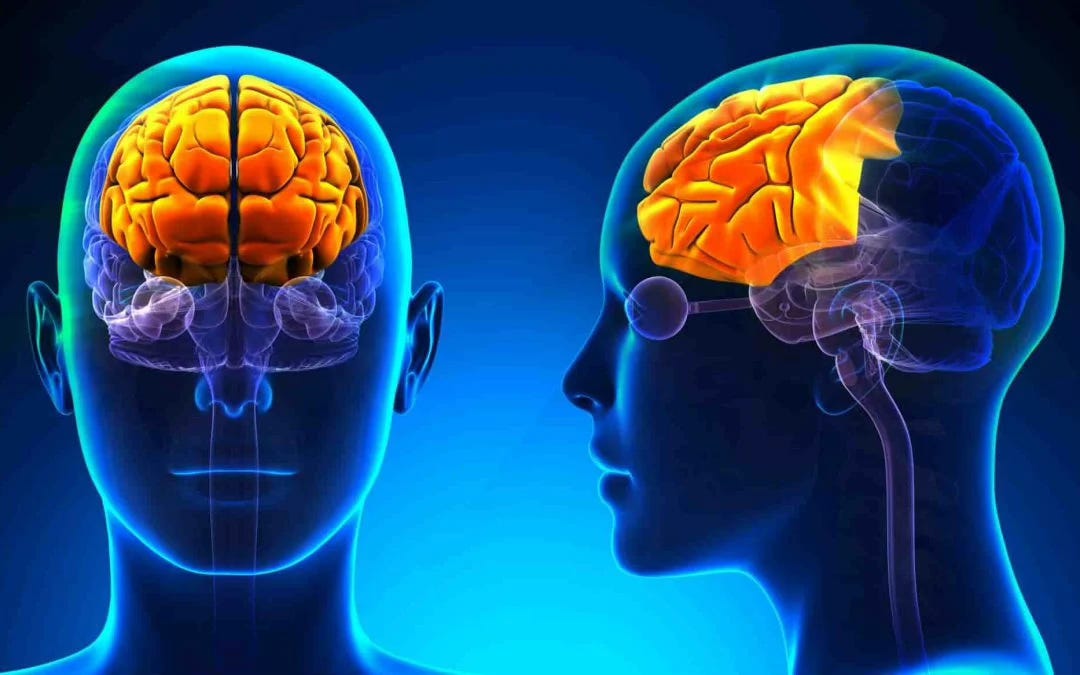
the prefrontal cortex is the region responsible for maintaining focus (attention), impulse control, emotional regulation, and decision making.
this is part of your brains that sits behind your forehead.
damage to this can lead to personality changes, difficulty controlling impulses and issues with planning or focusing.
the constant reach of your phone in the mundane or stillness of life, trains your prefrontal cortex that the discomfort needs to be resolved.
you build neural pathways with this constant action.
and those pathways get myelinated when repeated.
they become automatic.
and harder to change.
eventually anything that doesn't deliver a dopamine signal every eight seconds is than registered as still and/or boring.
i.e not worth it.
your brain changes what counts as stimulating.
and books, conversation, and real life are competing with something that was designed to stimulate you at all times.
so the brain starts to feel fatigued.
foggy.
Why individuals with ADHD are more vulnerable
so.
we covered what short-form content is.
what ADHD is.
how our brain is effected neurologically by short-form content.
but why are individuals with ADHD more vulnerable?
Low Baseline Dopamine:
the ADHD brain often has lower baseline levels of dopamine.
that leads to a constant search for stimulation.
short-form videos provide that immediate and unpredictable reward systems which satisfies that need for stimulation.
Delayed Gratification:
individuals with ADHD often have difficulty waiting for gratification.
the lack of impulse control makes it hard to disengage from the fast-paced content.
Executive Function Challenges:
deficits in self-regulation and time management.
it makes it difficult to stop scrolling as the brain fails to notice how much time has passed.
Task avoidance & High Stimulation:
people with ADHD may use apps to avoid tedious tasks.
choosing instant stimulation over sustained, focused effort.
The Perfect Storm
individuals with ADHD are more likely to act impulsively.
and have increased risks for addictive behaviors.
research indicates that those with higher ADHD symptoms are specifically correlated with higher rates of social media, gaming and smartphone addiction.
that is due to the executive function challenges.
adults with ADHD often use short-form video us to self-medicate for underlying psychological struggles.
research discovered that while ADHD generally predicts problematic video use.
the reason depends on which symptoms are dominant.
those with high inattention symptoms primarily scroll to alleviate a chronic susceptibility to boredom.
those with high hyperactivity-impulsivity tend to scroll to cope with emotional distress.
and have difficulty regulating emotions.
the rapid change of content can teach the brain to crave constant, easy novelty, making it more difficult to focus on tasks requiring long-term attention.
which is correlated to the low baseline dopamine levels leading to the constant search for stimulation.
while ADHD makes people more susceptible.
excessive use of short-form content can worsen ADHD-related symptoms.
like inattention and poor self-regulation.
which are both directly correlated to the function of the prefrontal cortex.
understanding which specific symptom drives the behavior can help tailor a strategy to break the digital addiction cycle.
Short-from platforms are engineered to be addictive.
it hijacks the reward system.
they offer brief, vertical videos with personalized recommendations that provide a constant stream of novel stimuli.
for a neurotypical brain, it’s engaging.
for an ADHD brain.
it’s a perfect storm.
check out my other posts.
more deep dives to come.
Great article !! I loved the one you got inspiration from as much as this one